hzlongjingtea
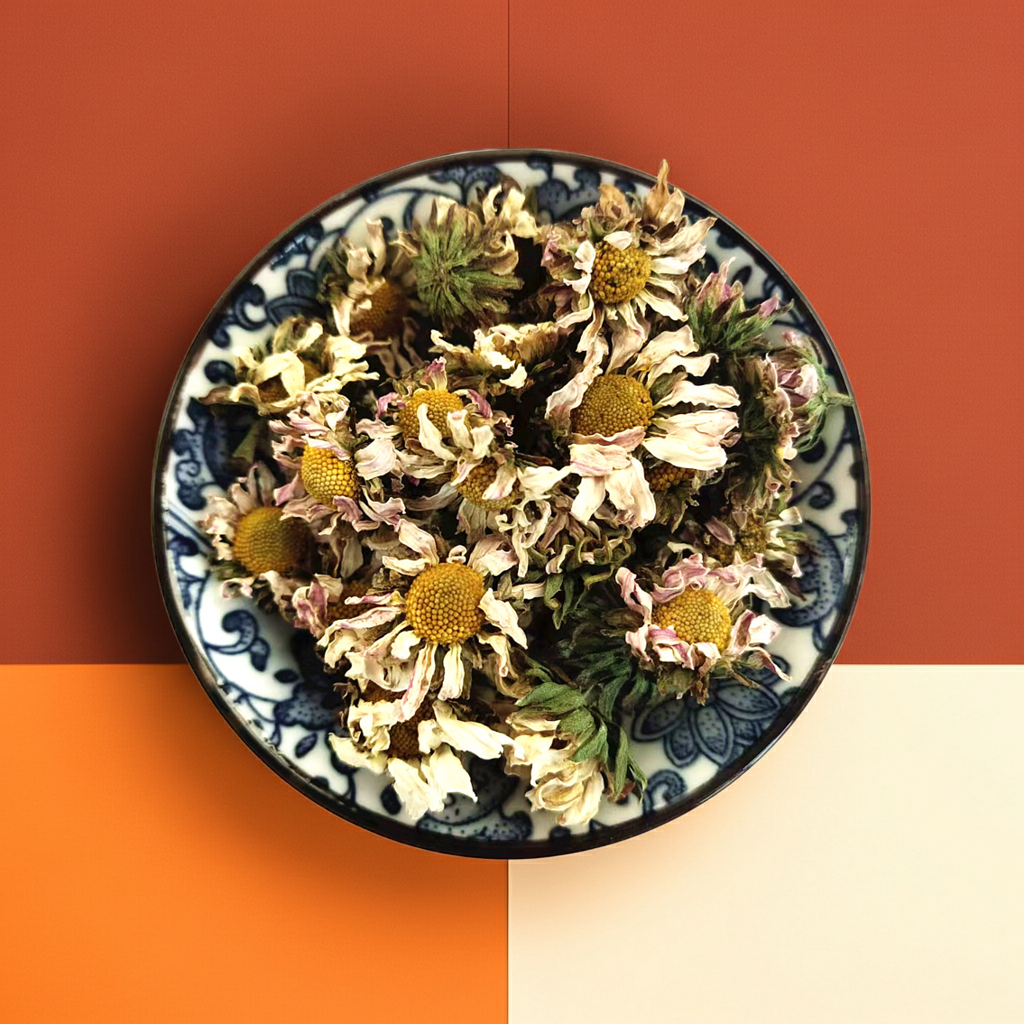
Qiandao Lake Rare Mountain Chrysanthemum | Traditional Charcoal-Dried
Qiandao Lake Rare Mountain Chrysanthemum | Traditional Charcoal-Dried
50000 in stock
Couldn't load pickup availability
l. The Core Narrative
This is not just another herbal tea.
This is a drinkable landscape from the misty mountains of Qiandao Lake, China—a sensory retreat ritual designed for modern rhythms. What we offer is not "benefits," but a complete terroir journey: from the specific slopes at 1,450 meters altitude, to the precise harvest during the Frost Descent solar term, to the slow charcoal-drying using traditional methods—all this effort, simply to let you witness the quiet three minutes of a flower blooming anew in 85°C water.


II. The Irreplicable Terroir Signature
True luxury stems from limitation. The distinctive flavor of Qiandao Lake chrysanthemum is locked in by a set of exacting natural laws:
Geographic Lock: Grows exclusively in the core ecological zone of Qiandao Lake at 1,450 meters altitude on Jinzi Peak, nourished year-round by the mist rising from the lake surface.
Temporal Lock: Harvested only during a 7-day window around the "Frost Descent" solar term each year, when the purple-to-white petal ratio and internal compounds reach their peak, hand-picked by experienced farmers.
Craft Lock: Rejecting modern high-temperature machine processing in favor of traditional charcoal-fire drying. This means over 90% more energy and time investment, solely to preserve the flower's active aroma and elegant form intact.
Therefore, it smells like wild mountain freshness and tastes like "crystallized mountain morning mist"—crisp, mellow, with the subtle honey notes of sunlight filtering through petals.


III. Specifications: Matched to Your Drinking Rhythm
We offer three options to suit different stages of exploration and lifestyles:
100g Explorer's Choice: Approximately 35 infusions. Perfect for a first encounter, or as an elegant accent in your diverse tea collection.
150g Enthusiast's Choice (Most Popular): Approximately 50 infusions. For those who've truly fallen for this flavor, providing ample reserve to integrate into your daily ritual.
200g Connoisseur's Choice: Approximately 70 infusions. Best per-cup value, for devoted enthusiasts to savor and share at leisure.


IV. Brewing: A Three-Minute Sensory Meditation
We recommend the following approach to initiate this ritual:
Observe: Place 5-10 dried flowers in a transparent vessel. Admire their compact form and natural purple-white hues.
Awaken: Let boiling water rest for approximately 90 seconds, cooling to 85-90°C.
Pour: Gently pour 300ml of water, submerging the flowers.
Wait: The critical step—wait 3 minutes. In this moment, set everything aside and focus on watching the petals unfurl slowly like ballet, as the liquor gradually transforms into a clear sunlit gold. This is the ritual itself.
Savor: First, gently inhale the rising steam (elegant wild floral notes), then take small sips. Experience the taste evolving from mountain-spring crispness, transitioning to gentle botanical mellowness, finishing with a pure, lingering sweetness.


V. Why It Appears in These Moments
It doesn't solve "problems," but often accompanies life scenes where one actively chooses to create pauses, draw boundaries, and pursue depth:
As a Dividing Line for Digital Dusk: Brewed after closing the last work tab, watching the flowers unfurl becomes the ideal physical ritual for the mind to switch from "online" to "offline."
As a Silent Companion for Deep Thinking: Kept at hand while writing, creating, or reading. Its presence is like excellent background music—unobtrusive, only enhancing.
As Cross-Cultural Flavor Dialogue: Serving it to friends, the terroir story and visual spectacle behind it become an engaging conversation about nature and craftsmanship.

VI. Create Your Tea Melody
Ancient tea culture wisdom tells us that exploration and variation are the source of keeping our senses alive. Today, you may be immersed in this ultimate elegance; tomorrow, perhaps a rich fermented tea will better resonate with your mood.
We encourage this exploration that follows intuition and seasons. It makes every tasting feel like a first encounter, and is also a tribute to the world's rich tea culture. In your life's tea repertoire, it will become that quiet yet luminous movement.
VII. Important Information
Ingredients: 100% Qiandao Lake chrysanthemum.
Storage: Please seal and store in a cool, dry place away from light to preserve its vibrant flavor long-term.
Allergen Notice: This product is produced in a facility dedicated to processing chrysanthemum flowers. Do not consume if allergic to plants in the Asteraceae family.
Professional Guidance: This product is a natural herbal tea. If you have specific health conditions or concerns, consulting a medical professional before consumption is a wise choice.
Disclaimer: This product is a food item. All descriptions are based on cultural tradition and sensory experience, and do not constitute medical advice. This product is not intended to diagnose, treat, cure, or prevent any disease.