hzlongjingtea
Hangzhou Premium Longjing Tea – Pre-Qingming Grade 1, Traditional Hand-Pan-Fired
Hangzhou Premium Longjing Tea – Pre-Qingming Grade 1, Traditional Hand-Pan-Fired
10000 in stock
Couldn't load pickup availability


【What Makes This Tea Special】
Harvested only once each year before the Qingming Festival (around April 4th), this early spring Longjing captures the purest essence of the season. The tea leaves are sourced from ecological tea gardens in Hangzhou's Qiantang District, Zhejiang Province, China, at an altitude of over 300 meters. Benefiting from the ecological advantages of the Thousand Island Lake Water Source Protection Area, the gardens are free from industrial pollution, with pristine water quality and abundant mist—these natural endowments create the unique freshness and mellow sweetness that define this Longjing tea. Handcrafted using traditional pan-firing techniques, it retains the maximum freshness, delicate fragrance, and mellow sweetness.
⚠️ Important Note: This product is NOT an officially certified "West Lake Longjing" (Geographical Indication Protected Product), but rather an authentic Hangzhou-style green tea with clearly labeled origin—We respect terroir, and we respect your right to know.
【Flavor Profile】
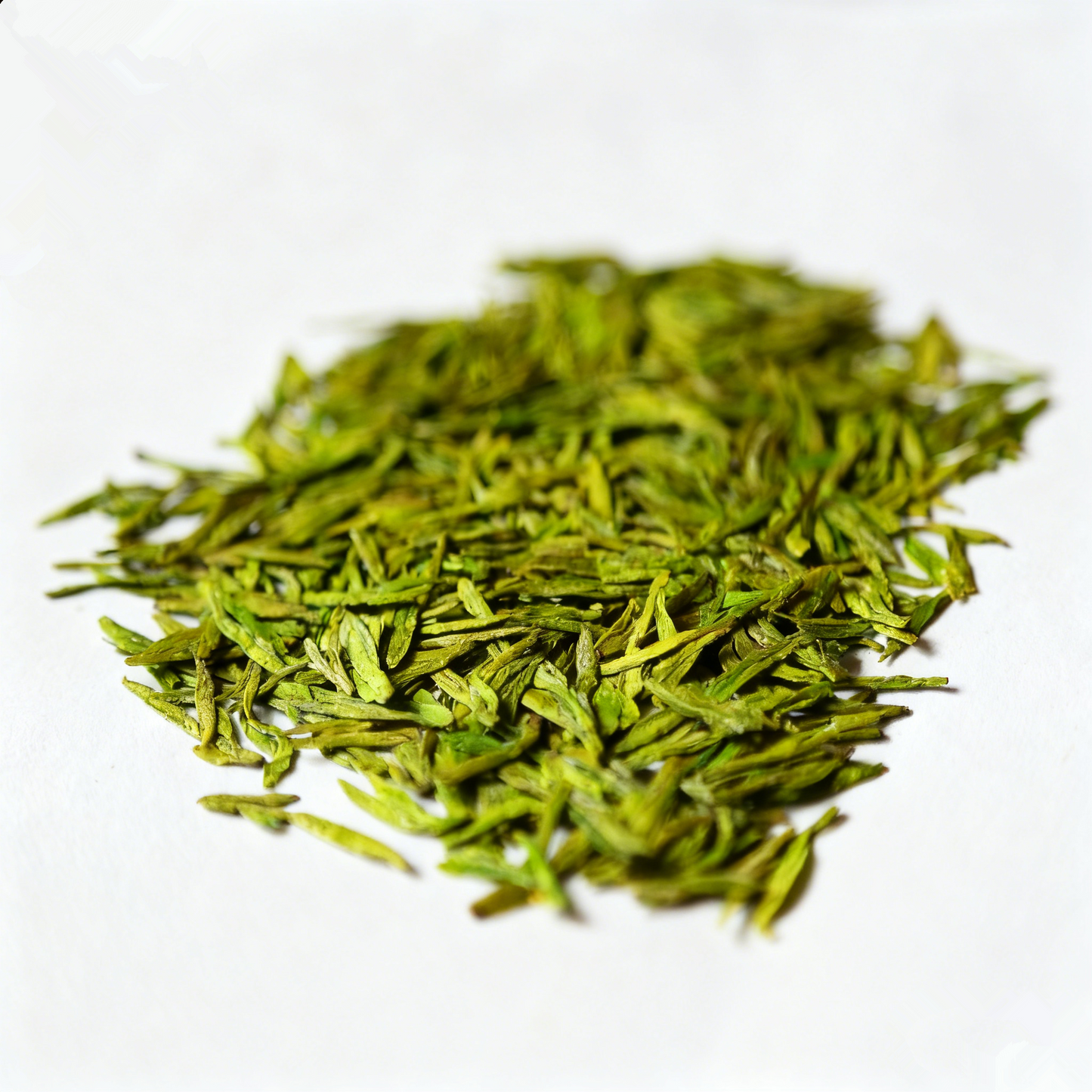
Dry leaves: Flat and smooth, color of tender green with hints of yellowish rice, uniform and clean
Tea liquor: Light yellowish-green, clear and bright, like morning spring light
Aroma: Elegant roasted soybean fragrance with fresh chestnut notes, occasionally hints of orchid from ecological gardens
Taste: Fresh and smooth upon entry, subtle astringency quickly transforms to sweetness, long-lasting aftertaste with throat moisture
Wet leaves: Complete buds and leaves, fresh yellow-green, elastic and lively
【How to Brew (Simple & Authentic)】
💧 Step 1: Choose the Right Water
Use purified water or low-mineralization spring water. Avoid tap water—chlorine and minerals can mask the delicate aroma of Longjing and affect taste.
As the Chinese tea proverb says: "Fine tea deserves fine water."
🫖 Step 2: Select Tea Ware by Number of People
Longjing emphasizes the balance of "shape, color, aroma, and taste"—different scenarios recommend different equipment:
👤 For 1 Person
Recommended: Clear straight glass cup (180-220ml)
Reason: Observe the tea leaves unfurl like orchid petals and slowly settle, immersing yourself in dialogue with the tea
👥 For 2-5 People
Recommended: Clear heat-resistant glass teapot (with filter, 300–500ml) + small tasting cups (30–50ml each)
→ Watch leaves unfurl, filter separates tea residue, convenient for multiple infusions;
OR White porcelain teapot (150–200ml) + fairness cup + small tasting cups
→ Teapot brews and pours, fairness cup distributes tea evenly, ensuring consistent strength for everyone.
Reason: Longjing buds and leaves are delicate and require precise steeping time control. These combinations prevent over-steeping bitterness while fairly sharing the tea, balancing aesthetics with practicality.
❌ Not Recommended: Yixing clay teapots, dark ceramic ware, thermal mugs—these can mask liquor color, absorb aroma, and make steeping time difficult to control, leading to bitterness.
⚖️ Step 3: Precise Tea-to-Water Ratio, Avoiding Too Weak or Too Strong
Longjing's flavor is elegant, and tea-to-water ratio is key:
Single glass cup (200ml): 2.5-3g tea (about 1 full tea spoon)
Teapot brewing (300ml total, 4 cups): 6-7g tea, first steep 20-30 seconds for quick pour, subsequent steeps increase by 10 seconds each
Those who prefer stronger flavor: May increase tea quantity by 10-20%, but never extend steeping time to avoid bitterness
📏 How Many Cups Can You Brew?
(Based on two daily cups — morning and afternoon — using 3g per brew)
95g: Lasts about 16 days (just over 2 weeks)
145g: Lasts nearly 4 weeks (24 days of steady tea)
290g: Lasts 7 weeks (48 days) — great value for everyday drinkers
Perfect for small households, offices, or anyone who enjoys fresh Longjing twice a day.
【Packaging Information】
Inner bag: Food-grade aluminum composite bag, nitrogen-flushed for freshness, oxygen and light-proof
Outer can: Food-grade tinplate can, strong sealing, effectively blocking light, moisture, and odors, locking in Longjing's fresh essence; minimalist and elegant design, smooth opening and closing, reusable (for tea storage, organization)
Environmental note: 100% recyclable tin cans, practicing sustainable living
Gift box set additionally includes: Natural bamboo tea scoop (with 2g/3g graduations) + Handwritten tasting card (containing brewing guide and origin story)
【Storage Recommendations】
Unopened: Store in a cool, dry place; for optimal freshness, refrigerate (0-5°C)
Opened: Seal and refrigerate, consume within 3-4 months for best flavor
Avoid: Direct sunlight, high temperature, humidity, and strong odors (green tea easily absorbs surrounding scents)
【Compliance & Transparency Statement】
【Product Basic Information】
Grade: Grade 1
Category: Green Tea (unfermented tea)
Ingredients: 100% pan-fired green tea, no additives, flavoring, or sweeteners
Origin: Ecological tea gardens in Zhejiang Province, China (non-West Lake area)
Shelf life: 12 months
Harvest time: Pre-Qingming 2025 (late March to April 5th)
Tea variety: Longjing 43
【Important Notes】
This product is not a "West Lake Longjing" geographical indication product; origin clearly labeled as non-West Lake area of Zhejiang
As a natural agricultural product, minor variations in dry leaf color or shape between batches are normal, reflecting the characteristics of handcrafted production
This product is a regular food item and does not possess any disease prevention, treatment, or health functions
Keep out of reach of children, consume in moderation as part of a balanced diet